
Case Study: N25 New Ross Bypass
A Neolithic Settlement at Ryleen, Co. Wexford
Client
Wexford County Council / TII
Sector
Roads / Transport Infrastructure
Location
New Ross, Co. Wexford, Ireland
The Challenge
The N25 New Ross Bypass formed part of a major road infrastructure programme through a landscape of high archaeological potential in south-east Ireland. Pre-construction and construction-phase works required archaeology to be investigated at scale while supporting delivery of the wider scheme.
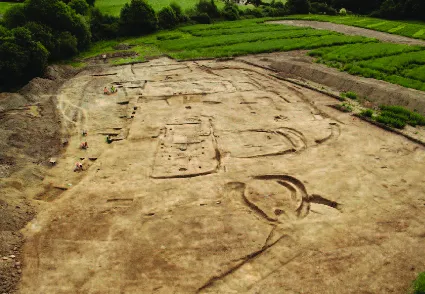
Within this broader programme, Ryleen emerged as one of the most important prehistoric sites identified. Excavation revealed the footprint of an Early Neolithic house — an exceptionally significant discovery for understanding the first farming communities in the region.
Our Approach
Rubicon’s work at Ryleen formed part of the wider archaeological investigations undertaken for the bypass. Across the full scheme, extensive testing and excavation were used to identify, assess and mitigate archaeological remains before construction progressed.
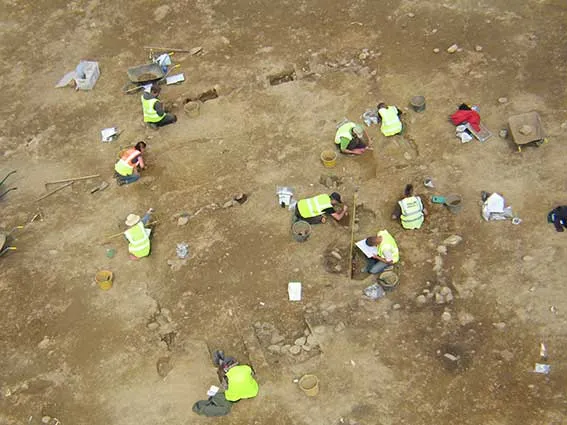
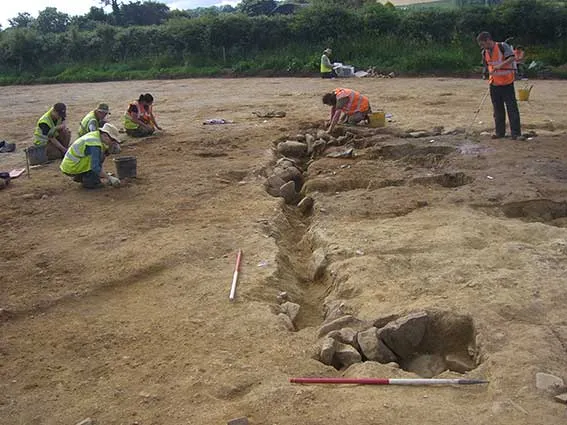
At Ryleen, excavation focused on careful hand investigation and recording of the structural evidence, artefacts and environmental remains associated with the settlement. The aim was not only to define the footprint of the structure, but to understand how it was built, used and dated within the early prehistoric landscape.
This detailed excavation and post-excavation work allowed the site to be interpreted as an early farmer’s dwelling with internal divisions and associated occupation evidence, supported by artefactual and radiocarbon data.
Some Statistics
The Discovery at Ryleen
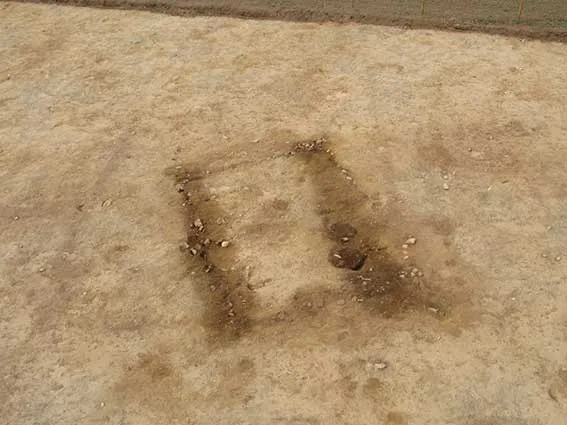
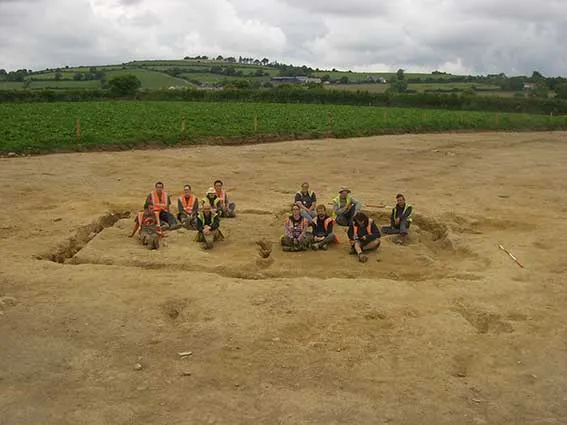
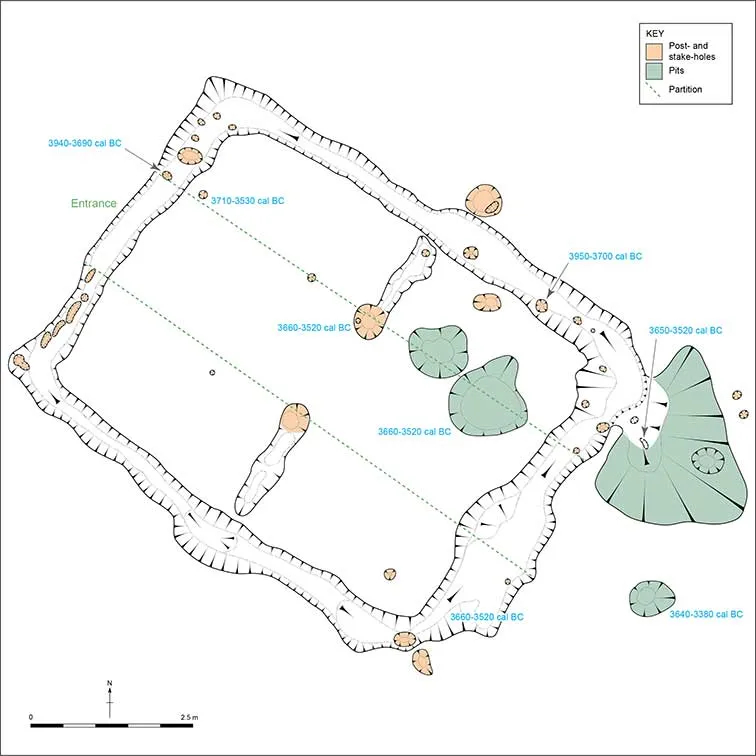
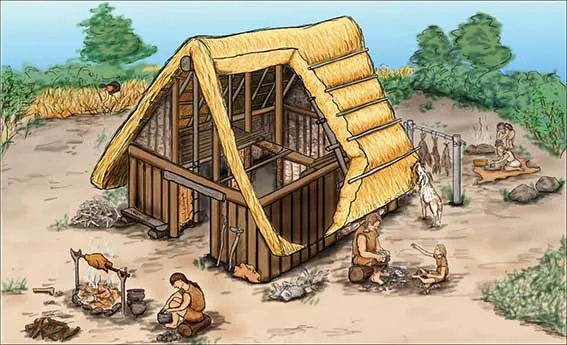
The principal discovery was a rectilinear Early Neolithic house, aligned roughly north-west to south-east, measuring approximately 8.50 m by 6.25 m and defined by a foundation trench with rounded corners and a north-western entrance.
The structure included evidence for internal organisation, with a wall formed by lateral slot trenches and central postholes dividing the building into two parts. Postholes and packing stones suggest a timber construction using split oak planks, posts and wattle, while fragments of daub-like clay indicate that parts of the building were plastered with a clay-rich mixture for insulation and weatherproofing.
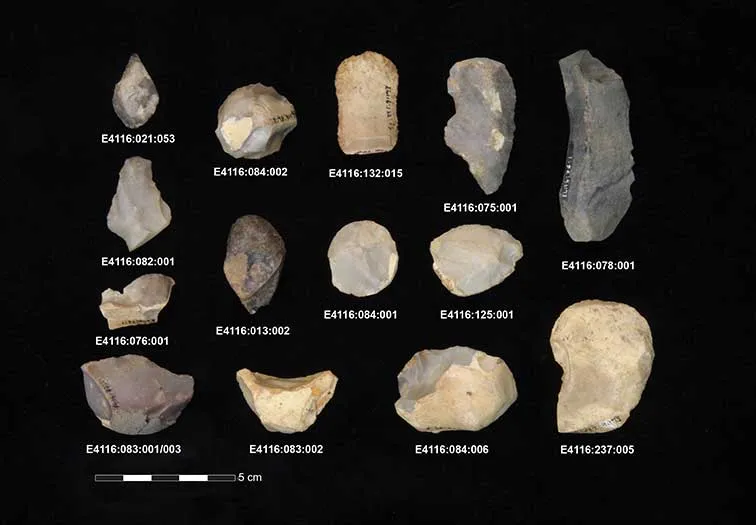
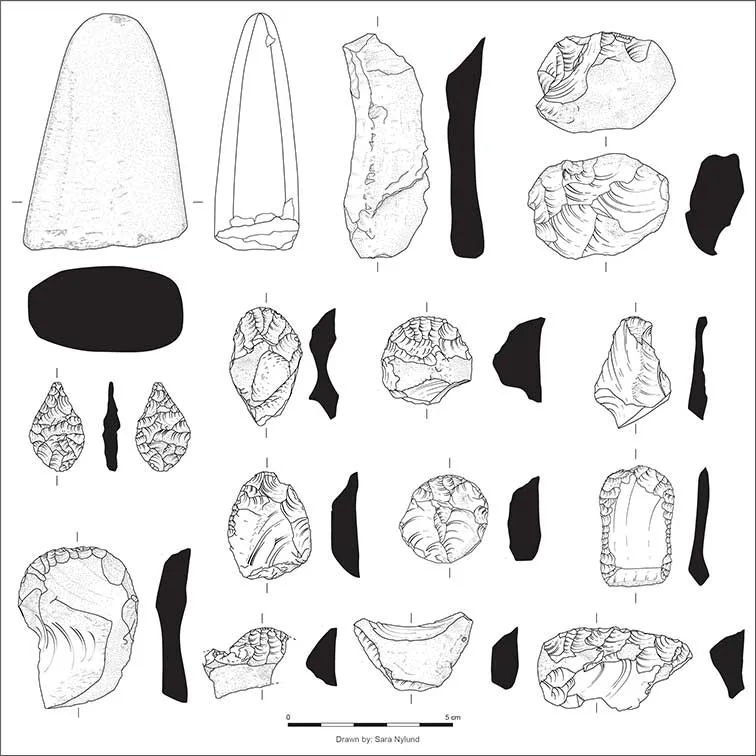
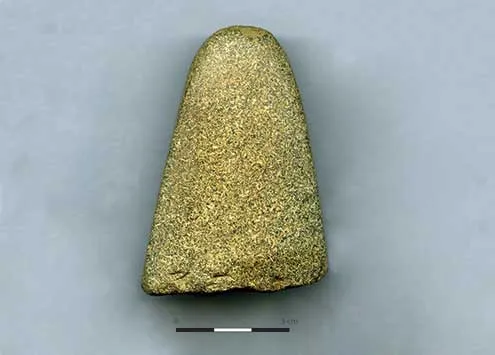
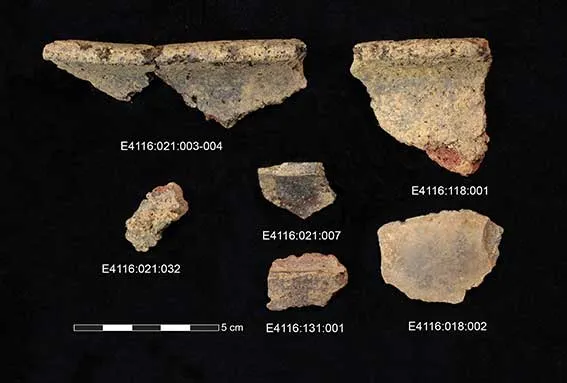
Finds from the associated features included Early Neolithic pottery, lithics, a polished stone axe and cereal grains, providing strong evidence for settled early farming activity. Radiocarbon dates from charred hazelnut shell place the occupation broadly between 3710–3520 BC.
Wider Archaeological Significance
Ryleen was not an isolated discovery. The archaeological works along the N25 New Ross Bypass identified more than 35 previously undocumented sites, spanning a very long chronology and demonstrating the richness of the Lower Barrow landscape.
Why Ryleen matters
- Provides rare, clearly defined evidence for an Early Neolithic timber house in south-east Ireland.
- Preserves structural, artefactual and environmental evidence in a single coherent settlement footprint.
- Adds materially to understanding of early farming communities in the Lower Barrow Valley.
Programme-level value
- Demonstrates the value of large-scale infrastructure archaeology in revealing previously unknown sites.
- Contributes to a broader narrative of human activity on the bypass route spanning thousands of years.
- Supports long-term academic and public engagement through publication and interpretation.
The Results
- Identified and excavated an Early Neolithic house of high archaeological significance at Ryleen.
- Recovered structural, artefactual and environmental evidence enabling robust interpretation of the site as an early farming settlement.
- Contributed to one of the most important recent archaeological datasets generated by an Irish road scheme.
- Helped create long-term public and research value through later publication and interpretation of the bypass discoveries.
Why Rubicon?
The N25 New Ross Bypass illustrates Rubicon Archaeology’s ability to deliver archaeology within major infrastructure programmes while also extracting maximum research and public value from significant discoveries.
Infrastructure archaeology
Experienced delivery of archaeological investigation in support of major transport and civil infrastructure schemes.
Excavation and interpretation
Careful fieldwork combined with post-excavation analysis to move from discovery to clear archaeological understanding.
Prehistoric expertise
Strong capability in identifying and interpreting settlement evidence from Ireland’s earliest farming communities.
Legacy and dissemination
Commitment to ensuring discoveries continue to generate value through publication, interpretation and public outreach.
Publication & Legacy
The wider N25 New Ross Bypass archaeology programme has since been brought together through public interpretation and formal publication, including Places for the Living, Places for the Dead, helping ensure that discoveries such as Ryleen continue to inform both research and public understanding.
This long-term legacy strengthens the value of the project beyond mitigation alone, showing how infrastructure archaeology can contribute meaningfully to national narratives of settlement, landscape and identity.
Project Gallery
Outcome
Through careful excavation, recording and interpretation, Rubicon Archaeology helped reveal a rare Early Neolithic settlement at Ryleen within the wider N25 New Ross Bypass programme — turning a road scheme investigation into a lasting contribution to the archaeology of south-east Ireland.