


Digital exhibition
Cappagh: life in prehistoric Waterford
Working photographs, studio photography and artefact illustrations from our months-long excavation at Cappagh Quarry.
Welcome
The excavation at Cappagh
We are delighted to present working shots, studio photography and artefact illustrations from our months-long dig at Cappagh Quarry, Waterford. The excavation uncovered two Neolithic houses and a Bronze Age cemetery, providing an extraordinary insight into life in prehistoric Waterford.
Archaeology often takes us to far-flung destinations, away from the hustle and bustle of everyday life. That can make it difficult for local communities to see their ancient history being uncovered. It is with great enthusiasm that we display these images here for everyone to enjoy and experience.
See it in person at Dungarvan Shopping Centre, daily from 10am-5pm during Heritage Week, alongside an exhibition from Waterford County Museum.
The landscape
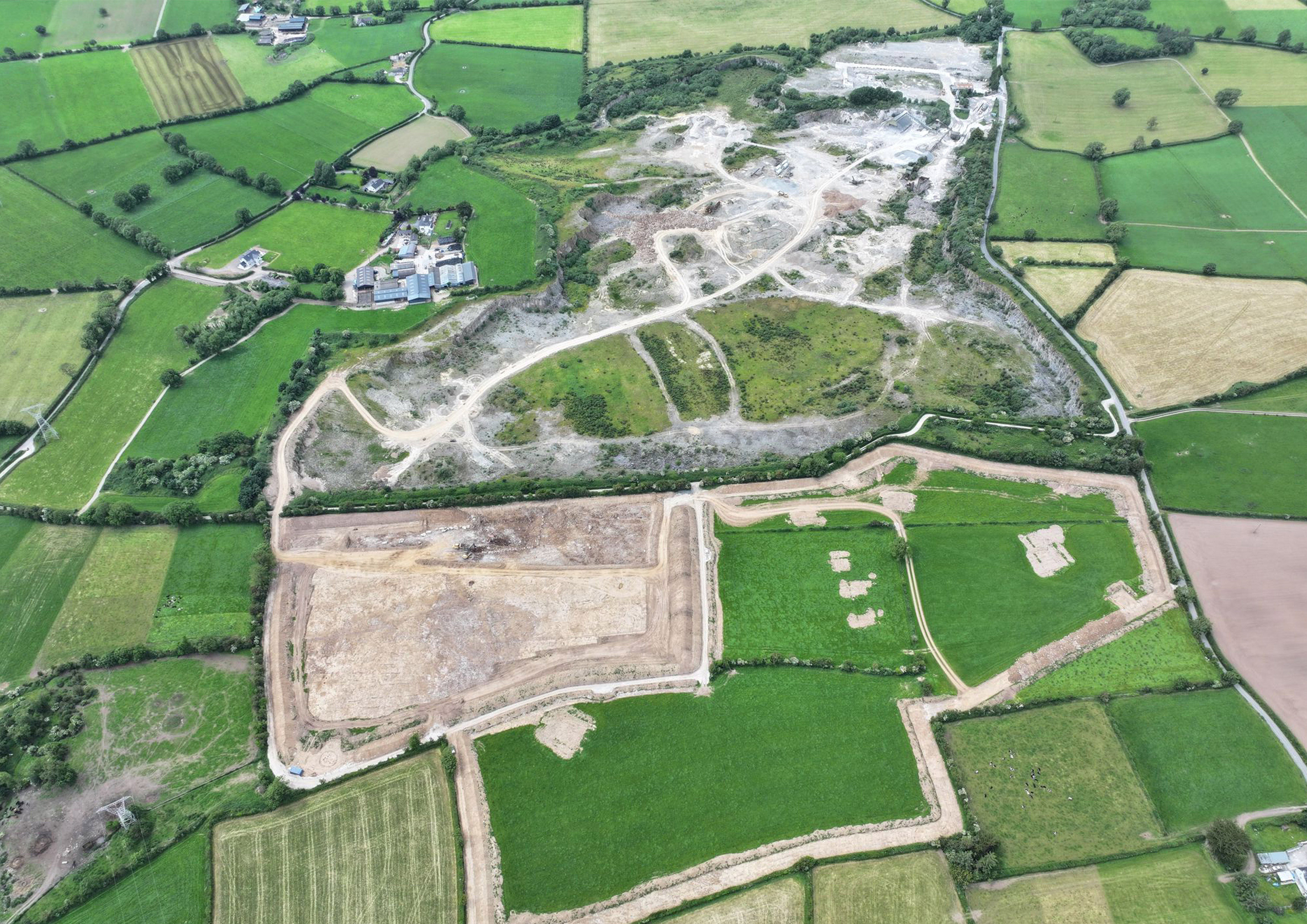
Cappagh Quarry from above
Cappagh from the sky
A view of Cappagh Quarry from the sky, showing the existing quarry in the background and areas of expansion in the foreground.
House one
Waterford's first excavated Neolithic houses
Working shots of Rubicon archaeologists excavating one of the two Neolithic houses discovered on site - the first Neolithic houses ever excavated in Waterford.
Excavating the first house
Polished stone axe
Stone axe illustration
House two
Tools, adornment and another home
Area 42 working shot
The excavation crew unearth the foundations of the second Neolithic house discovered on site.
Flint scraper
Stone bead
The cemetery
Mapping a Bronze Age cemetery
Cemetery plan
Once features have been excavated, everything is meticulously mapped using GPS coordinates to recreate a digital outline of the site. This plan shows the cremation cemetery discovered on site, enclosed by a ring-ditch.
Pottery sherds
Decorated pottery
The ring-ditches
Excavating a prehistoric monument
Ring-ditch from above
Drone photography of the second ring-ditch discovered on site, featuring a distinctive bedrock lining. The second half falls outside the scope of excavation and remains in situ for future archaeologists to uncover.
Excavating in sections
A working shot of the second ring-ditch being excavated in sections.
Animal bone
One interesting discovery from the ring-ditch is distinctive animal bone, possibly from a canine. Carbon dating organic material such as bone provides an estimated age range for features and helps place their creation in history.
Stone tools
Polished axes and their illustrations
Careful studio photography and archaeological illustration preserve the shape, material and working marks of the stone tools recovered at Cappagh.
Polished stone axe
Stone axe
Polished axe illustration
Stone axe illustration
Food and daily life
Grinding grain and preparing food
Paula's discovery
Paula Jardi Talavera, archaeologist with Rubicon, holds a fragment of quernstone that she discovered while excavating a prehistoric pit. A large number of stone tools like this quernstone were discovered during the excavation.
Quernstone
Carinated bowl
Archaeology shared
Welcoming the community to Cappagh
Outreach is an important part of Rubicon's archaeological work, connecting discoveries with the people and communities whose history they illuminate.
Waterford County Museum visit
Members of Waterford County Museum attend an open day on site, where site director Gillian McCarthy shows them the excavated ring-ditch and cremation cemetery.
Whitechurch National School visit
Children from Whitechurch National School tour one of the Neolithic houses at Cappagh Quarry as site director Gillian McCarthy explains the rigours of archaeological investigation.
Continue exploring