
Some people find their way into archaeology through a university course, a television programme or a chance discovery. For Julian George Anoussis, it all started with his grandfather and a few good stories about the past.
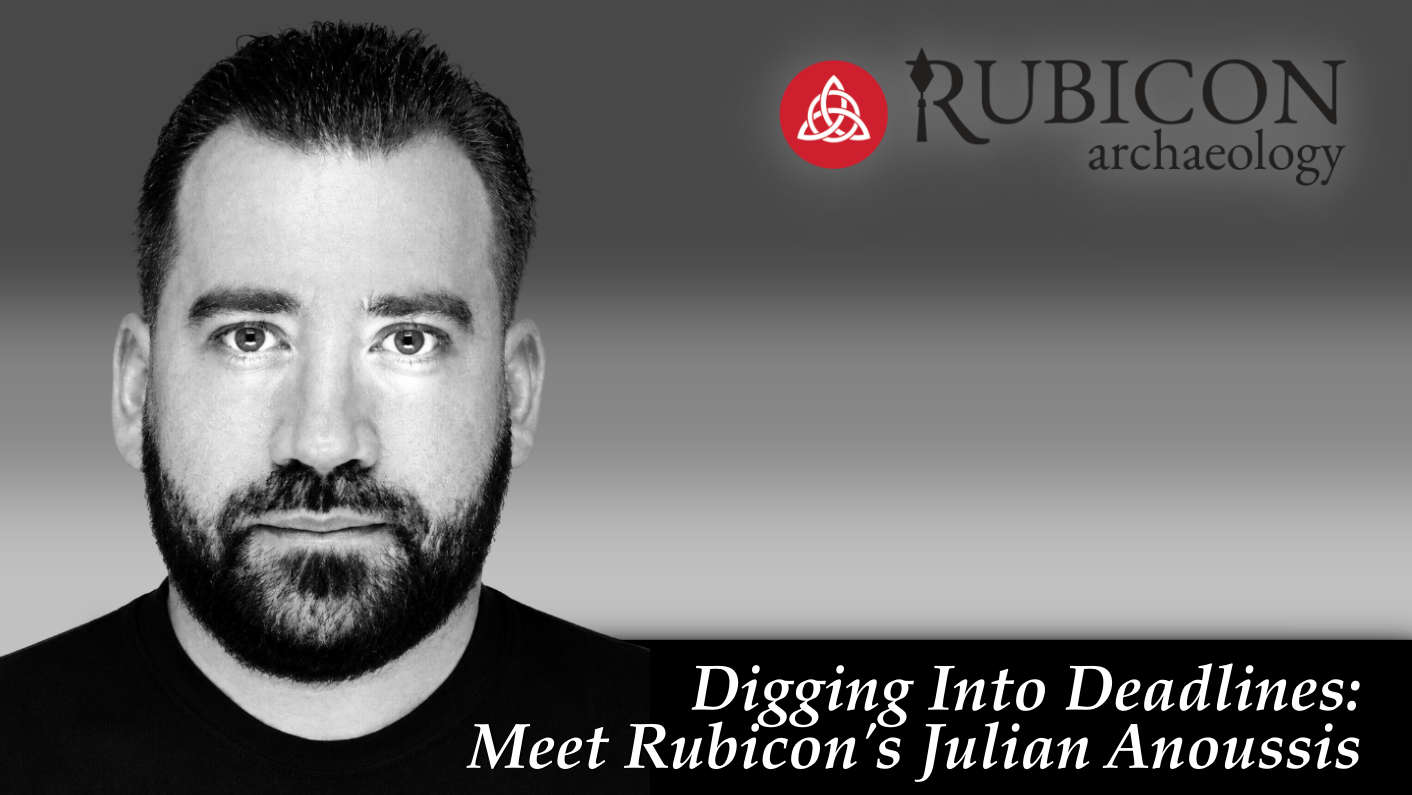
In 2026, Julian joined Rubicon Archaeology as Consultancy Project Manager for our Irish branch, bringing international experience, a background in business analysis and a passion for making sure archaeology and development work hand in hand.
As part of our Staff Spotlight series, we caught up with Julian to learn more about his journey into archaeology, what he enjoys most about his work and why he believes archaeology can actually help development projects move forward.
A Passion Passed Down
Julian's interest in archaeology goes all the way back to his childhood, when his grandfather would share stories about the past. Those early conversations sparked a fascination that would eventually shape his career.
When we asked what first got him interested in archaeology, Julian had a particularly fond memory to share.
"My grandfather. When I was a child he would tell stories about the past and talk about archaeology with real passion, the kind that makes a young listener lean in. I was hooked from then on, and I’ve never quite stopped leaning in."
That early enthusiasm eventually took Julian into a career spanning archaeological projects in Greece, Canada and now Ireland.
Along the way, he developed a background in business analysis, earning BA, MA and MBA qualifications. Today, he combines that experience with his interest in archaeology, helping to connect the technical side of archaeological work with the practical needs of clients and development projects.
Keeping Archaeology Moving
As Consultancy Project Manager at Rubicon, Julian helps coordinate the many moving parts involved in archaeological consultancy.
From planning-stage assessments and Environmental Impact Assessment Report (EIAR) chapters to licence applications and fieldwork logistics, his role involves making sure projects are properly planned, resourced and delivered.
It's a job that requires balancing different priorities, working with a wide range of people and occasionally juggling several very different projects at once.
Fortunately, that variety is exactly what Julian enjoys.
" In one day I can go from a solar farm in Waterford to a hospital campus in Galway to a medieval street in Limerick, each with its own history, its own people and its own problems to solve. I also enjoy the point where a report lands with a client and you can see it changing a decision."
That last point is particularly important. Archaeological consultancy isn't simply about producing reports or meeting planning requirements. It's about providing information that helps clients make informed decisions.
Julian's role is to make sure that information is delivered clearly, accurately and on time, while ensuring the archaeologists have the resources and support they need to concentrate on the archaeology itself.
The Wins That Don't Make Headlines
When people think about memorable moments in archaeology, spectacular discoveries and unusual finds probably spring to mind.
But for Julian, some of the most satisfying moments happen away from the site.
As someone responsible for keeping projects on track, he takes particular pride in seeing a complicated situation come together, especially when it involves overcoming challenges or helping a client better understand the importance of archaeology.
"It’s the moments when a project that looked stuck comes together: a licence pack that needed four people’s input landing on time, or a client who came in sceptical of archaeology leaving the kick-off call understanding why it matters to their programme. Those don’t make headlines, but they’re what good consultancy looks like, and I’m proud of how often our team manages it."
Does Archaeology Really Slow Down Development?
It's a familiar concern in the construction and development sectors: archaeology means delays, additional costs and unexpected complications. But Julian disagrees.
"A common misconception is that archaeology slows development down. Done early and done properly, it does the opposite: it takes the unknown out of a site before anyone commits to a design. For anyone thinking about the field: you don’t have to be the person in the trench. Archaeology needs planners, GIS specialists, writers and project managers too."
It's an approach that sits at the heart of effective archaeological consultancy.
By identifying archaeological considerations during the early planning stages, developers can make informed decisions, account for potential challenges and reduce the likelihood of unexpected issues arising once work begins.
It's also something Julian's own career demonstrates. While excavation is often the most visible part of archaeology, there's an enormous amount of work happening behind the scenes.
From planning and research to logistics, reporting and project management, successful archaeology depends on people with a wide range of skills and backgrounds.
And for someone who combines a passion for archaeology with a background in business analysis, it's a particularly good fit.
From Project Plans to the Wrestling Ring
Of course, there's more to Julian than archaeological assessments, project programmes and planning applications!
When he's not coordinating archaeological projects, Julian is a keen football fan and a big wrestling fan, so his weekends are rarely short of entertainment.
And while archaeology and professional wrestling might seem worlds apart, both certainly have their fair share of unexpected twists…Brother!
What Julian Brings to the Team
With experience working on archaeological projects across Greece, Canada and Ireland, Julian brings an international perspective and a valuable combination of archaeological knowledge and project management expertise to Rubicon.
His approach is a reminder that successful archaeology involves much more than what happens on site. It's about bringing together the right people, asking the right questions and making sure the information we uncover can be put to good use.
We're delighted to have Julian as part of the team and look forward to seeing the projects he'll help deliver in the future.